
October History Feature: The Story of the Apple Dumpling 🍎
It’s October 1st, and you can smell the change in the air.
The mornings are cooler. Leaves are beginning to trade their summer greens for shades of gold, orange, and red. Mums and pumpkins sit on porches, and there’s something about that first real chill in the air that makes you want to turn on the oven and bake something warm.
For me, this time of year has another familiar sign that fall has officially arrived:
Cortland Apples....
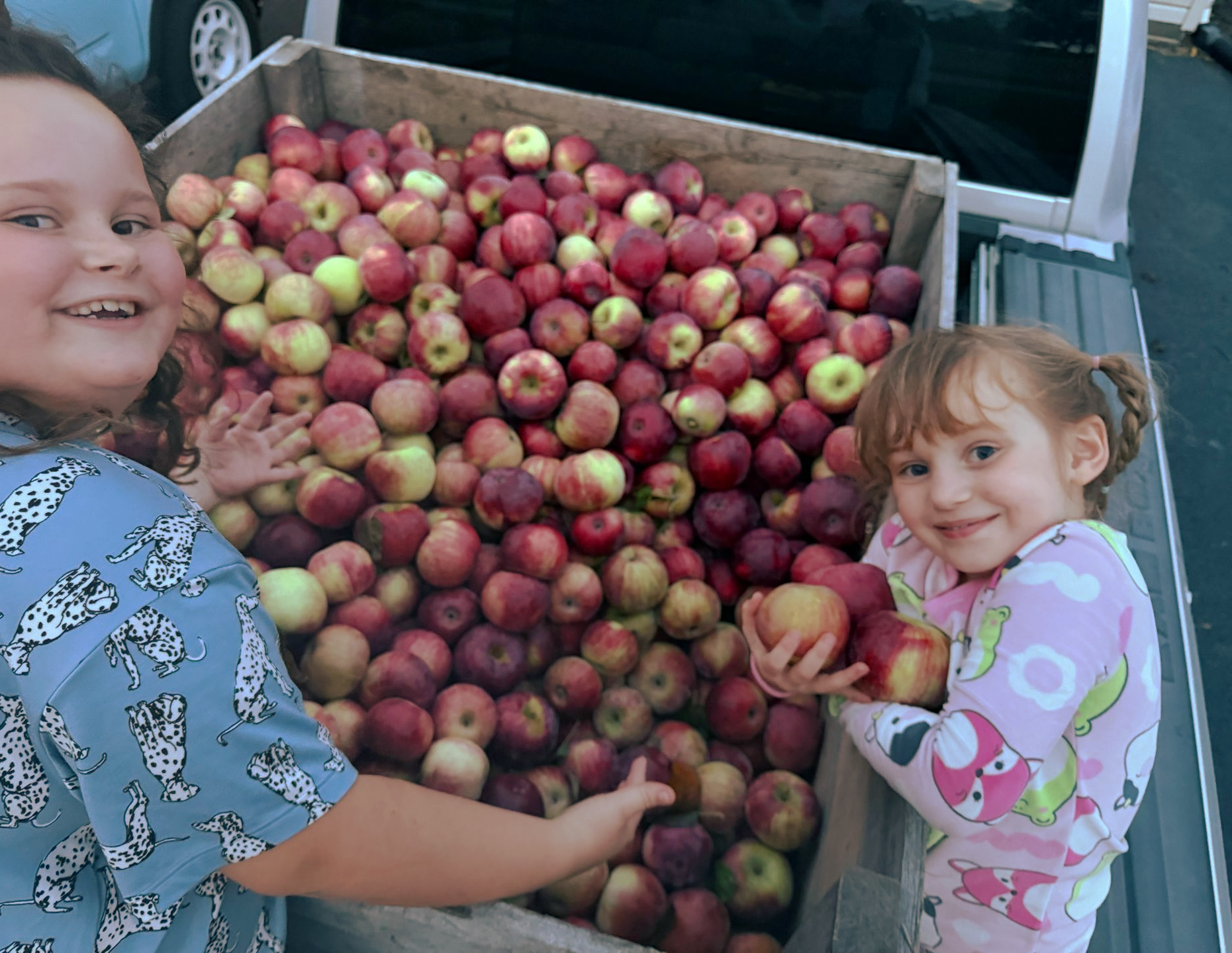
For as long as I can remember, every year my dad has gotten a shipment of Cortland apples from New York. And when I say a shipment, I don't mean a few bags from the grocery store.
I mean apples. Lots and lots of apples.
A big bin overflowing with red and green Cortlands—the kind of sight that immediately meant our kitchen was about to get very busy.
As a kid, I knew exactly what was coming next.The house would begin to smell like cooked apples. Apples would be peeled, sliced, cooked, baked, dried, and preserved.
We made homemade applesauce by cooking the apples down and putting them through a hand-crank machine. You'd turn and turn the handle as the warm applesauce came through one side while the peels and seeds separated out and then it was ladled into canning jars to be sealed.
Dried apples, baked apple pies…and, this month's highlight, apple dumplings!
It was simply part of fall.
There wasn't anything fancy about it at the time. It was just something my dad did every year and something we did together with my siblings and mom.
But that's the funny thing about childhood traditions.
You don't always realize they're traditions while you're living them. Then one day, you're grown up. You have children of your own. And suddenly you're standing beside another enormous bin of Cortland apples, watching your own girls reach in and choose their favorites.
And you realize:
This is their childhood now, too.
Even the Apple Has a Story...
The Cortland apple itself is fitting for this story because its roots are in New York.
Cortlands were developed at the New York State Agricultural Experiment Station in Geneva, New York, in the late 1800s. A cross between the McIntosh and Ben Davis, the Cortland eventually became known as a versatile apple well suited for cooking and baking.
Maybe that's part of why they became our apple.
Year after year, those Cortlands traveled from New York to my dad, and from there they became jars of applesauce, trays of dried apples, pies cooling on the counter, and warm apple dumplings coming out of the oven with a homemade syrup.
But our family certainly wasn't the first to discover just how good an apple could be when wrapped in pastry.
So, Where Did the Apple Dumpling Come From?
Apple dumplings have been around for centuries.
Early versions can be traced to England, where apples wrapped in pastry appeared long before the dessert became a familiar part of American kitchens.
When European settlers brought their cooking traditions to America, the apple dumpling found an especially comfortable home right here in Pennsylvania.
Pennsylvania Dutch cooking has long been closely tied to the seasons and to using what was plentiful. And when fall arrived, apples certainly were.
They could be dried and stored. Cooked into applesauce. Slowly made into apple butter. Baked into pies.
Or an apple could be peeled and cored, filled with sugar and spices, wrapped completely in pastry and baked until the fruit inside became tender and the crust turned golden.
The apple dumpling was simple, filling, economical—and delicious.
And here's one of my favorite pieces of apple dumpling history:
They weren't always considered dessert.
In Pennsylvania Dutch tradition, apple dumplings could even be eaten as a meal or for breakfast, sometimes served warm with milk poured over them.
Personally, I don't think I'd complain about bringing that breakfast tradition back. 😉
A Little Piece of History in Our Café
That's one of the reasons I love doing these History Features at Covenant Café.
Food has a way of carrying stories.
A recipe can tell us something about the people who lived before us—what they grew, what they preserved, how they fed their families, and how they turned simple ingredients into something worth gathering around the table for.
But sometimes food carries our own stories, too.
When I look at the pictures of my girls beside this year's enormous bin of Cortland apples, I don't just see apples.
I see my childhood. I can feel my arm burning from cranking the applesauce maker, but still begging for another turn.
I can smell the apples cooking.
I can picture pies on the counter and trays of apples being dried.
And, of course, I can picture those sticky, delicious apple dumplings.
Now my girls get to stand beside the same kind of apples and make memories of their own.
Maybe years from now, the smell of cinnamon and baked apples will take them right back here.
That's the beautiful thing about traditions.
Join Us..
And I can’t wait to share this delicious one with the Jonestown community and Lebanon county.
So this October, when you enjoy an apple dumpling at Covenant Café, you're enjoying a dessert with centuries of history behind it, strong roots in Pennsylvania food tradition, and a pretty special place in our family's story.
From a wooden bin filled with Cortland apples...
to my parent’s kitchen...
to my childhood...
to my girls...
and now, to our tables at Covenant Café.
Some recipes are simply too good—and some traditions too special—not to pass along. 🍎🤎
Come get a fresh apple dumpling, or order some to share before October's color trades it's place with Winter's chill!