The Origins of French Toast Casserole
Explore the fascinating history of French Toast Casserole. Inspired by pain perdu ('lost bread'), a recipe enjoyed for over 1,500 years. Discover how this simple dish evolved over centuries and became a favorite in homes around the world.
Heritage French Toast Bake: A Breakfast with Centuries of History
You walk out on a Saturday morning and Mmmhmm... what's that delicious smell of cinnamon and sweetness?
The morning air is still cool, sunlight is spilling through the windows, and somewhere nearby a pan of something warm and wonderful has just come out of the oven. Notes of vanilla and brown sugar drift through the room. Butter bubbles along golden edges. Fresh berries glisten like little jewels waiting to be scattered across the plate. Before you ever take a bite, the aroma alone feels like a hug from the past.
That comforting smell? It's our Heritage French Toast Bake—and its story begins long before French toast was called French toast.
One of the earliest known recipes appeared in a Roman cookbook dating to the 4th or 5th century. The recipe instructed cooks to soak bread in a mixture of milk and eggs before frying it—a practical way to revive stale bread and transform it into something nourishing and flavorful.
As the recipe spread throughout Europe during the Middle Ages, it became known by many names. In France, it was called pain perdu, meaning "lost bread," because it gave new life to bread that would otherwise be thrown away. Similar versions appeared in England, Germany, Spain, and other countries, each adapting the recipe to local ingredients and traditions.
French toast arrived in America with European settlers and quickly became a staple in farmhouses and family kitchens. Early American cooks valued the dish for the same reason their ancestors had: it was economical, filling, and reduced waste.
Imagine a farmhouse kitchen before sunrise. A cast-iron stove crackles softly in the corner. A grandmother gathers yesterday's bread, a few eggs, milk from the morning's milking, and a pinch of cinnamon from a treasured spice tin. Nothing fancy. Nothing wasted. Yet somehow, those humble ingredients become something memorable—something people talk about long after the plates are cleared.
The baked version of French toast came much later.
While traditional French toast was cooked one slice at a time on a griddle, home cooks in the late 19th and early 20th centuries began experimenting with baked bread puddings and breakfast casseroles. These dishes were especially popular in rural communities, church gatherings, and large family households where feeding a crowd efficiently was important.
By the 1950s and 1960s, recipes for overnight baked French toast began appearing in community cookbooks, church recipe collections, and family recipe boxes across America. The casserole-style preparation allowed cooks to assemble everything the night before and simply place it in the oven the next morning—making it a favorite for holiday breakfasts, Sunday gatherings, and special occasions.
Our Heritage French Toast Bake honors this long history.
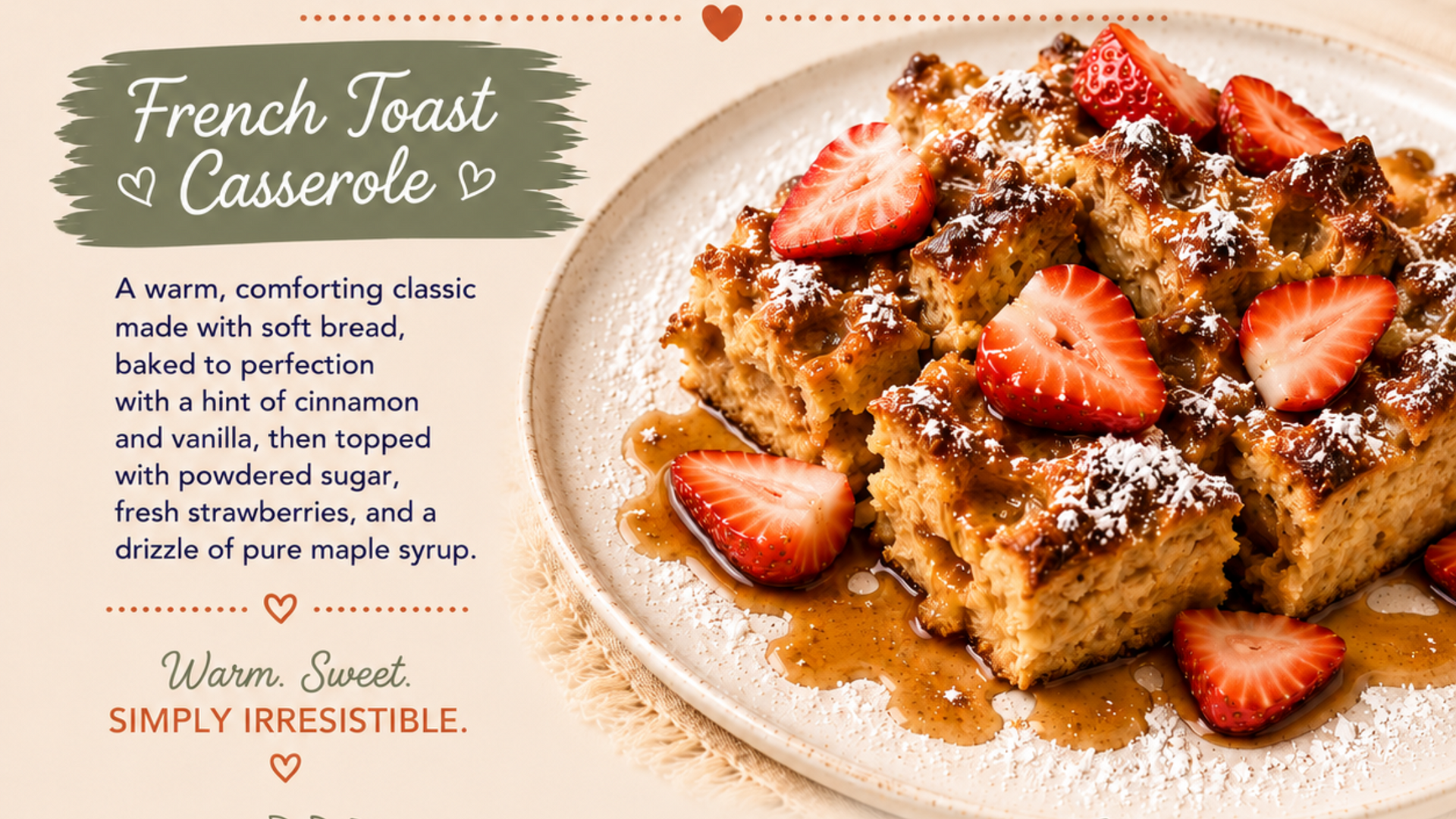
We start with bread, soaking it in a cinnamon-vanilla custard inspired by generations of home cooks. As it bakes, the custard transforms into a soft, pillowy center while a buttery brown sugar crumb topping turns beautifully golden. The scent alone is enough to slow you down. Served warm with pure maple syrup, and fresh seasonal fruit, it's the kind of breakfast that invites conversation to linger and coffee cups to stay full a little longer.
What began as a simple way to save stale bread has become one of the most beloved comfort foods in the world.
From ancient Roman kitchens to French countryside homes, from American farm tables to church fellowship halls, this humble dish has connected families and communities for centuries.
Maybe that's why it still feels special today.
Not because it's complicated, but because it reminds us of something we've almost forgotten in our busy world—the joy of gathering around a table, sharing a meal made with care, and savoring a slow morning with the people we love.
Today, we're honored to continue that tradition at Covenant Café—one warm serving at a time.
See you soon ❤️